AI as a Washing Machine – and the Problem with the Red Sock
- ai
- founding
- care work
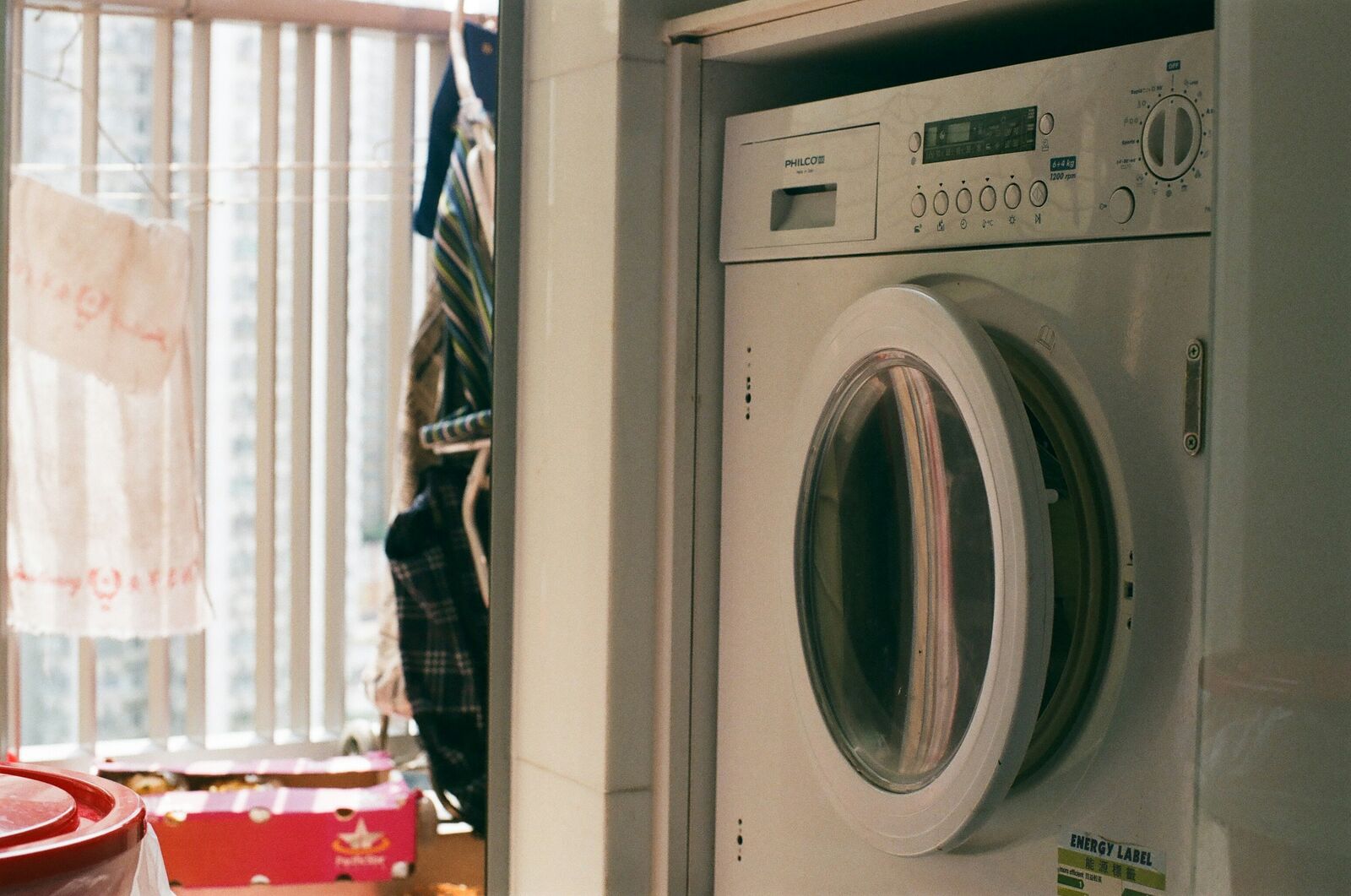
When I sometimes picture the sheer amount of time a large family’s laundry took before the washing machine, I get a little dizzy. A washday used to take several days: soaking, boiling in lye, scrubbing on the washboard.1
Doing other tasks at the same time was simply impossible, and running and maintaining the household, including making new things (sewn clothes, bed linen), was an effort that took a team. Then as now, this work is unpaid (when you do it yourself), yet it makes paid work and the next generation possible.
With the invention of household machines, the time needed for housework went down, so that a housewife in 1950 managed alone what a household a hundred years earlier needed three to four people for, as historian Ruth Schwartz Cowan showed for the US.2
It’s similar with founding a company today. AI is the washing machine, dishwasher, robot vacuum and meal planner for solo founders of startups, which traditionally needed a team. Without it, no single person can handle the workload of the many areas that founding involves.
Fittingly, multitasking is a core skill of all mothers anyway, and when working with Cowork and agents, it becomes a blueprint for excellence at work.
Used more and more – from the first chat to the morning briefing and delegating tasks – AI multiplies time and skills, and who should benefit from it more than people with care responsibilities, who can’t sit in the garage with their laptop until all hours because they have a family? Mothers already work more productively because they’re used to working in tight time slots. But I don’t want to conclude from this that we should load ourselves up even more just because there’s another machine – rather, that it’s possible to achieve more with fewer resources.
Ruth Schwartz Cowan also found that, despite the machines, housewives’ overall workload didn’t go down, because the new possibilities raised expectations and standards, too.2
Who doesn’t know this – just because it’s possible, I’ll make another version – let’s see what it looks like. It also makes experimenting and trying things out possible, but with AI you can also produce a lot of smoke and mirrors just because you can. As an experiment, I had AI write me a business plan. Ten minutes later, I was holding it in my hands and didn’t even want to read it.
I knew: this is a product with no substance (“workslop” is now the term for it3). It looked like a business plan, but back then I knew far too little about my business to make a sensible plan – so I threw it out. Was it a waste of time? It certainly wasn’t resource-friendly.
My learning with AI has had its ups and downs. I learned the most about working with AI from a proper crash landing.
A week before my pitch at a competition, I had wrecked my first Care-Coin prototype in a vibe-coding frenzy. The app was meant to show how easy it could be to sign up, log your care work and earn Care Coins for it. In that version, they lived on a blockchain, but nobody should have to understand blockchain to use it. A provider in the background took care of that by confirming transactions automatically for as long as you were logged in.
I had started with a template from the Algorand Foundation and rebuilt it with Claude, back then simply in the chat. It was astonishingly fast – until something broke.
A login problem that I had put off simply wouldn’t go away. After nights of copying and pasting under time pressure, I had completely lost track. Nothing in the app worked anymore.
I only found the bug once I stepped away from the computer and calmly went through every step with some distance. For onboarding, I had built in a form tool from another provider. So the path through the app briefly led through an outside address, and that very detour broke the login every single time.
To come back to the washing machine analogy: this time, I had definitely washed the red sock along with everything else. Preparation shapes the result, it’s that simple. One single item that doesn’t belong, and everything comes out pink.
If I had mapped out the flow and thought the steps through carefully in advance, I would have spotted the detour as a source of error much sooner.
All those hours I could have slept.
I still made it to the pitch, took third place and won my first grant for Care-Coin.
Today I build with a clear process: precise instructions, one step at a time. That way I can retrace every step. And, almost more importantly, I understand every one.
The crazy thing is: I’d had this skill all along. I just hadn’t brought it to work.
We know how to prepare
At home, I do nothing else. Before the robot vacuum sets off, I clear the Lego bricks off the carpet; otherwise it stops every two minutes and my time savings are gone. Before the washing machine runs, I pick out the red sock. I think ahead about what could go wrong and deal with it before it happens.
Anyone who does care work practices exactly this every day. The Rutgers Center for Women in Business surveyed working people with caregiving responsibilities and identified 18 skills that grow through care work4: anticipating needs, managing time, handling complexity.
That’s exactly what working with AI requires.
The skill is there, the usage isn’t
And yet women use generative AI around 25% less often than men on average, according to an analysis of 18 studies with more than 140,000 people.5 At the same time, women in Germany do considerably more unpaid care work than men.6
Whether caregivers use AI less often hasn’t been measured directly yet. But the gap sits exactly where the matching skill gets the most practice.
My guess is that one reason is this: the skill isn’t on anyone’s CV. People who have organized a family’s daily life for years rarely call it project management. And those who don’t see their own strength are more hesitant to try new tools.
What we’re building
This is where Care-Coin comes in. We’re building a platform that makes care work visible: anyone who logs their care hours earns Care Coins, reward points that show what they actually do. We’re also planning the Skill Pass, an AI tool that translates everyday care into the language of professional skills. “Clearing away the Lego bricks” then becomes what it really is: forward planning.
Sort first, then wash
You don’t find the red sock by washing for nights on end. You find it before the machine starts.
Anyone who does care work has known this for a long time. Time it showed up on the CV, too.
AI is a revolution in the world of work and has made Care-Coin possible so far. But it doesn’t replace human ambition. Still, if you asked AI, “What reasons can you find for giving care work economic recognition, and should we do it?”, this is what would come out:
There are strong reasons to do so. Without unpaid care work, neither the economy nor the care system would function, yet it doesn’t show up in any measure of economic output. Those who do it often pay with income, career and pension. And the skills they build remain invisible. The United Nations has even written “recognize and value unpaid care and domestic work” into its Sustainable Development Goals as target 5.4.7 The hard part is the how: care can only be measured to a limited extent, and not everything we do out of love wants a price tag. Whether and how we recognize it is a decision for society. I can sort the arguments, but I can’t make that decision.
Does AI have the last word here? No, we have to make this decision and use AI to put it into practice. This blog post will automatically turn into several Instagram posts, YouTube Shorts and X posts while my washing machine runs and I … (I’m not telling).
If you want to know what happens next with Care-Coin: sign up for the newsletter below. You’ll be the first to know when our campaign on Startnext, a German crowdfunding platform, goes live – expected on 19 January 2027.
One question for you: What do you use the time AI saves you for? → Answer (10 seconds)
Take care 🩷
Cover photo: Emily Chung on Unsplash
Sources
-
Planet Wissen (WDR): Wäsche waschen (in German)
-
Ruth Schwartz Cowan: More Work for Mother (1983), review in the Christian Science Monitor
-
Niederhoffer et al., Stanford Social Media Lab and BetterUp Labs: AI-Generated “Workslop” Is Destroying Productivity, Harvard Business Review, September 2025
-
Rutgers Center for Women in Business: Why Businesses Should Value Caregivers Now
-
Harvard Business School, Working Knowledge: Women Are Avoiding Using Artificial Intelligence. Can That Hurt Their Careers?
-
German Federal Ministry for Family Affairs: New figures on the Gender Care Gap (in German; Time Use Survey 2022)
-
United Nations: Goal 5 – Gender Equality